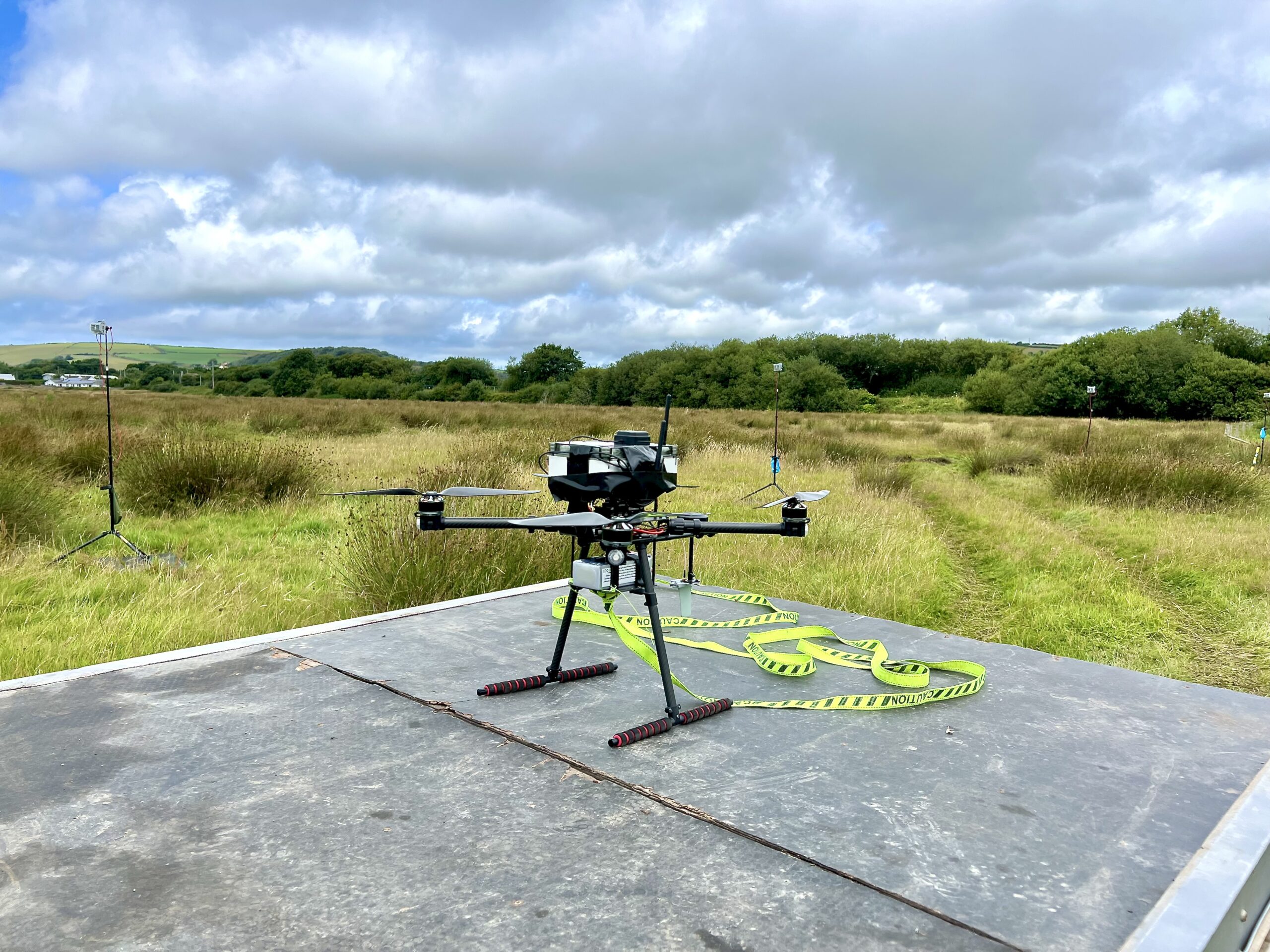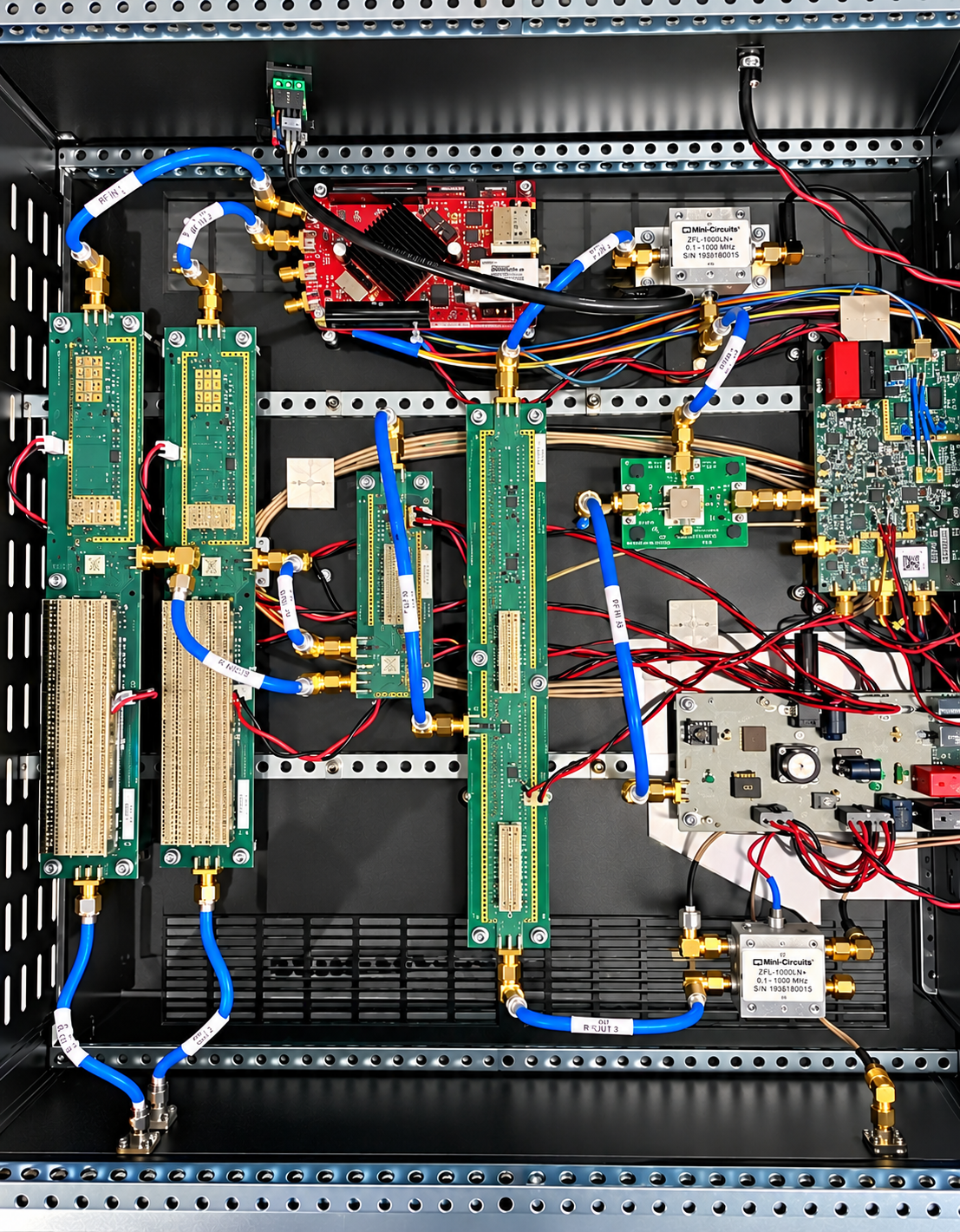
A medical technology developer was exploring whether low-cost radar could provide a more practical route to non-invasive cardiac sensing. 42T designed and built a working frequency-modulated continuous-wave (FMCW) radar prototype, demonstrating the feasibility of the lower-cost approach and providing a platform that subsequently progressed into hospital trials.
Key outcomes
The challenge
Assessing how the heart fills and empties can provide important information about cardiac health, but existing methods can involve invasive procedures or complex specialist equipment. Early trials had already shown the potential of radar for non-invasive cardiac sensing, but they relied on expensive research-grade hardware that would not be practical for a commercial system.
FMCW radar had been identified as a potentially more affordable approach, due to its lower sampling frequency requirements. The client needed to establish whether an FMCW system could achieve the performance needed for cardiac sensing in practice, and to create a usable platform for further evaluation and development.
“42T brought a practical, hands-on approach to the project and moved quickly from design through to a working prototype, collaborating well with the academic and software partners involved… ”
Client feedback
42T’s solution
42T designed and built a working FMCW radar prototype using low-cost, off-the-shelf components to test the approach in practice and establish the limits of the selected hardware. Working from the agreed system architecture, 42T designed the RF transmit and receive chains, intermediate-frequency stages and chirp-generation hardware, before integrating these with the data-acquisition subsystem supplied by a third party.
A key part of the work was establishing the practical performance limits of the low-cost frequency synthesiser device while maintaining a linear frequency sweep. 42T created a dedicated test setup to characterise the waveform generator and determine its practical performance limits.
Through testing and optimisation, 42T established a workable sweep rate of more than 300 times faster than the example in the manufacturer’s datasheet. This gave the team a measured basis for developing the prototype and allowed evaluation of the FMCW approach to continue.
42T completed the detailed design, build, integration and testing of the radar prototype, before characterising and optimising the complete system for evaluation. This identified the key factors affecting performance and provided a clear evidence base for targeted improvements in the next stage of development. The resulting prototype was subsequently used in hospital trials to collect patient data, moving the work beyond bench evaluation. Through its sensing and instrumentation expertise, 42T helped demonstrate the feasibility of a much lower-cost FMCW radar approach and gave the client a clearer path towards further development.
“…Their RF expertise, combined with detailed testing and optimisation, helped us get the best possible performance from the off-the-shelf hardware and their support on documentation enabled efficient approval of initial human trials. The resulting system gave us a robust platform for continued evaluation and development and helped us move from academic proof of concept into actual clinical data collection.”
Client feedback
Why 42T?
Pushing low-cost electronics further
Extending the practical capability of off-the-shelf hardware through testing and optimisation.
Applying specialist RF expertise
Designing, building and characterising radar hardware for a demanding sensing application.
Evidence-led development
Using targeted testing to establish real performance and guide development decisions.
Meet the team
Paul has over 30 years of experience in electronics product development, spanning technology consultancy and product companies. His expertise includes RF systems, radar technology, wireless communications and sensor development, with a focus on translating complex technical requirements into practical, working solutions.
Joe specialises in electronics design and development, with experience taking complex systems from initial concepts through to working prototypes. His expertise includes circuit design, PCB development, hardware integration and testing, supporting the development of practical, reliable electronic systems for demanding applications.
Let us help you