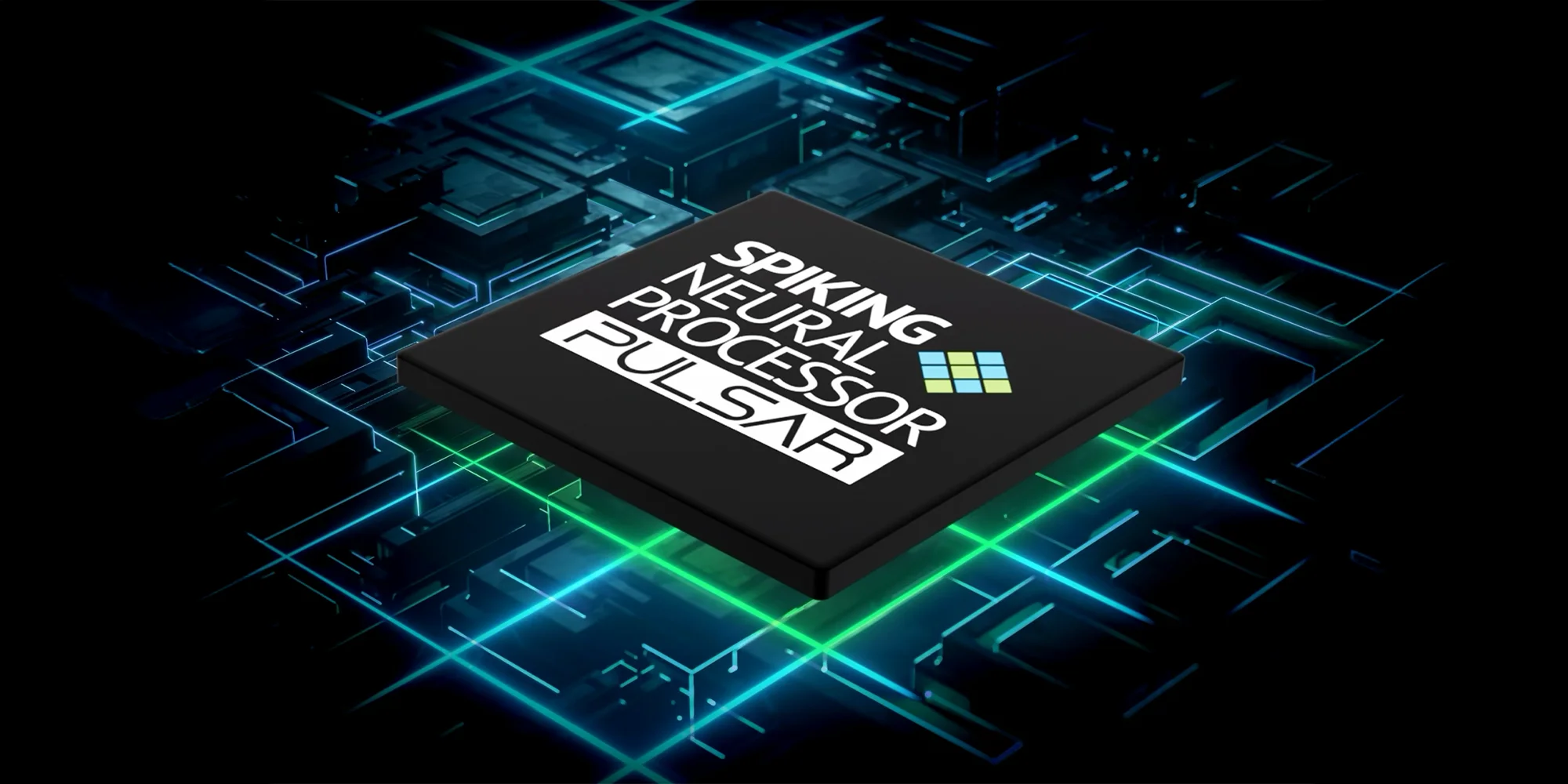
42 Technology is partnering with Innatera, a leader in brain-inspired Edge AI processors, to help its clients access the latest breakthroughs in ultra-low power intelligence at the sensor edge for new product innovations.
By combining Innatera’s spiking neural processors with 42T’s experience in consumer, industrial and manufacturing applications, the collaboration will focus on developing Edge AI solutions for anomaly detection and condition monitoring. It will enable 42T’s design team to develop ultra-low power retrofittable or built-in devices for self-diagnosing motors, fans and pumps, as well as many other applications. The aim being to help companies reduce unplanned downtime, improve asset reliability, and strengthen operational safety through continuous, localised insight.
“Neuromorphic computing is one of the most disruptive developments we’ve seen in industrial sensing and control for a long time. Our clients are looking for low cost, low power practical ways to get more value from their machines and processes, from higher uptime and better product quality to safer working environments.”
“By combining Innatera’s ultra-efficient, event-driven processors with our consulting and product development expertise in industrial and manufacturing systems, we can help our clients unlock entirely new classes of smart, responsive solutions that simply weren’t feasible with traditional electronics and AI.”
“Across industries, products are being packed with sensors but too often that rich data never turns into meaningful insight where it matters most: inside the device. Our neuromorphic processors enable always-on pattern recognition and anomaly detection at the edge, within tight power and cost budgets.”
Innatera’s neuromorphic processors are built around Spiking Neural Networks (SNNs), a brain-inspired form of AI that processes information as sparse, time-based events rather than dense data streams. This event-driven Spiking Neural Processor (SNP) architecture delivers ultra-low power consumption and sub-millisecond response times, enabling always-on pattern recognition and anomaly detection directly at the sensor edge, without depending on power-hungry cloud infrastructure.