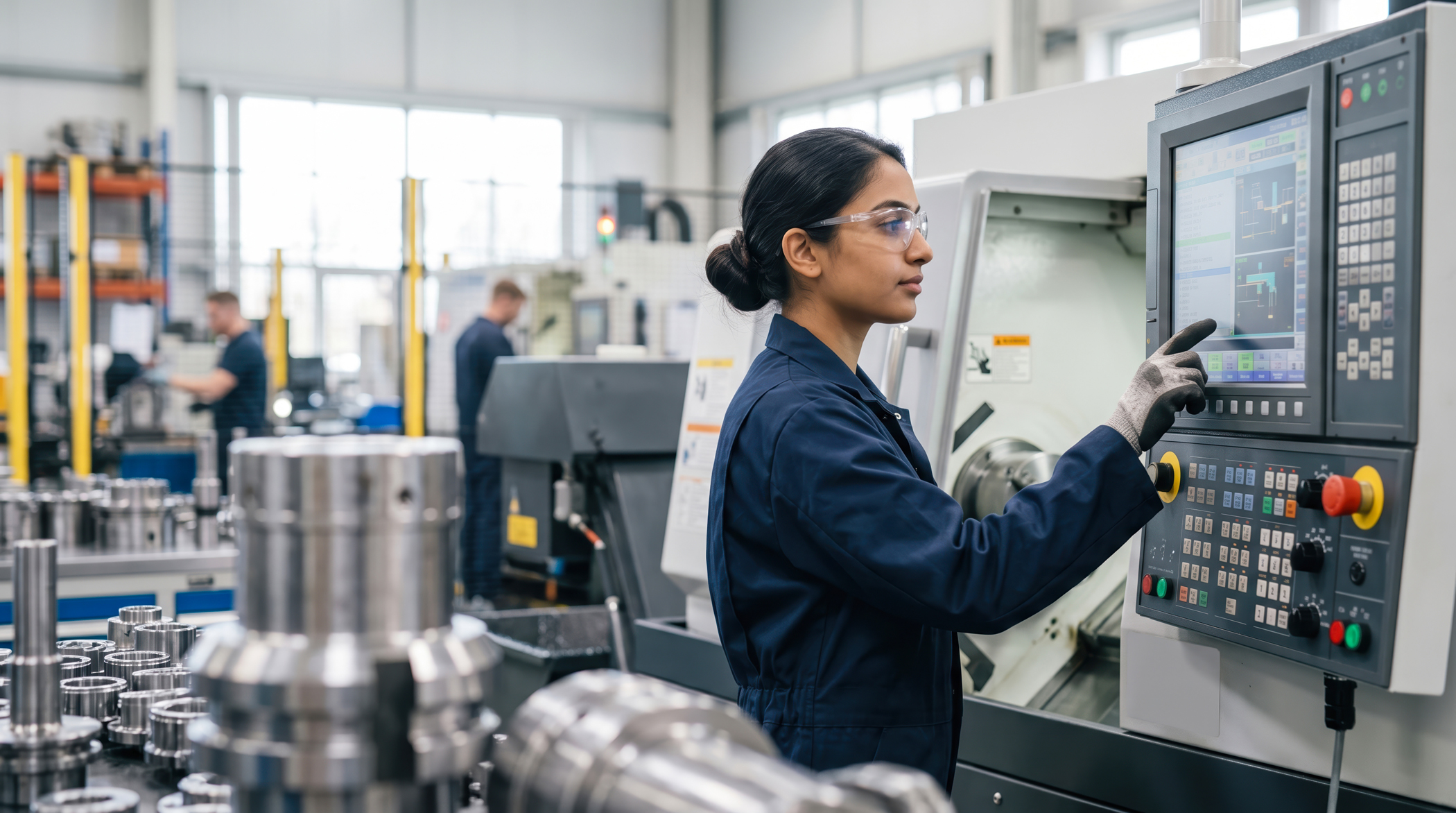
42 Technology (42T) has developed a natural-language Edge AI agent that enables production engineers and technicians to control complex industrial equipment using everyday language. The company has also demonstrated its sophisticated natural-language control in a working system, showing how the technology can operate reliably on local Edge AI hardware.
Industrial engineers often have to work across multiple systems and interfaces to keep production equipment running smoothly. 42T’s Edge AI agent can help cut through that complexity by removing the need for operators to memorise specialist commands, refer to technical documents or navigate complex interfaces when something goes wrong. As a result, this new AI tool has the potential to reduce training requirements, improve efficiency and make equipment easier and safer to operate.
The system combines natural-language understanding with real-time equipment control and machine-state awareness, so users can issue commands, ask questions, and get context-aware support using either spoken or typed instructions. It can quickly retrieve information from a pre-configured library of operator manuals, technical documentation and fault-finding guides to give users immediate contextual help without interrupting their workflow.
Unlike consumer voice assistants, 42T’s solution runs entirely on Edge AI hardware where all data is stored and processed locally on a company’s own premises. This approach protects sensitive operational data, gives companies complete control over their AI models, and enables constant offline operation without relying on third-party cloud services or subscriptions.
The system has been specifically designed for use in industrial environments, with options such as foot-pedal activation for the wake command and wireless headsets. It can interpret user intent in noisy environments or if spoken commands are incomplete. It operates within pre-defined guardrails and can be configured to require human confirmation before acting in safety-critical applications.
The technology is suitable for a wide range of applications, from laboratory automation – where hands-free operation can significantly boost productivity – through to manufacturing equipment and industrial process control. A natural-language interface is particularly valuable where technical knowledge is spread across multiple manuals, embedded in software, and retained by experienced operators.
“Production engineers and technicians often need quick, reliable guidance while working on live equipment but the information they need is usually buried across multiple manuals or in complex, menu-driven interfaces. Using a natural-language AI agent as a user interface means they can easily get accurate, context-aware answers without interrupting their workflow. They can simply ask questions such as, ‘How do I calibrate channel three?’ or ‘Why won’t the pump start?’ to get the support they need.””
42T has developed a working demonstrator to show that its natural-language control can run on compact, embedded hardware. The demonstrator, which was featured earlier this year at the CW International Conference in Cambridge, allows a signal generator to be controlled using spoken commands via a small language model (SLM) running locally on a single-board computer (SBC). The SBC handles the complete Edge AI workload including speech detection, speech-to-text conversion and agent orchestration.
In addition, 42T is working closely with a leading industrial equipment manufacturer to integrate a natural-language AI agent into selected products. The project is providing valuable insights into how this technology can best be deployed across complex industrial systems with multiple inputs from sensors and sub-systems.
Looking ahead, natural-language AI agents could evolve beyond controlling individual pieces of equipment into a ‘digital foreman’ system capable of monitoring multiple production assets simultaneously, prioritising and highlighting issues requiring immediate operator attention. This approach would reduce the need for operators to monitor multiple screens, lights, and other devices, while improving manufacturing efficiency and reducing costs.