A drug discovery research group needed to automate a complex manual laboratory process to increase throughput and support the next stage of its programme. The proposed system represented an investment of around $150,000, with the wrong choice risking costly downtime, reduced scientist productivity and delays to the wider research programme.
42T worked with the client to turn its laboratory process into a clear engineering specification for potential automation suppliers. This gave the client an independent, vendor-neutral basis for comparing systems and understanding where additional capability and supplier support would deliver practical value.
Key outcomes
The challenge
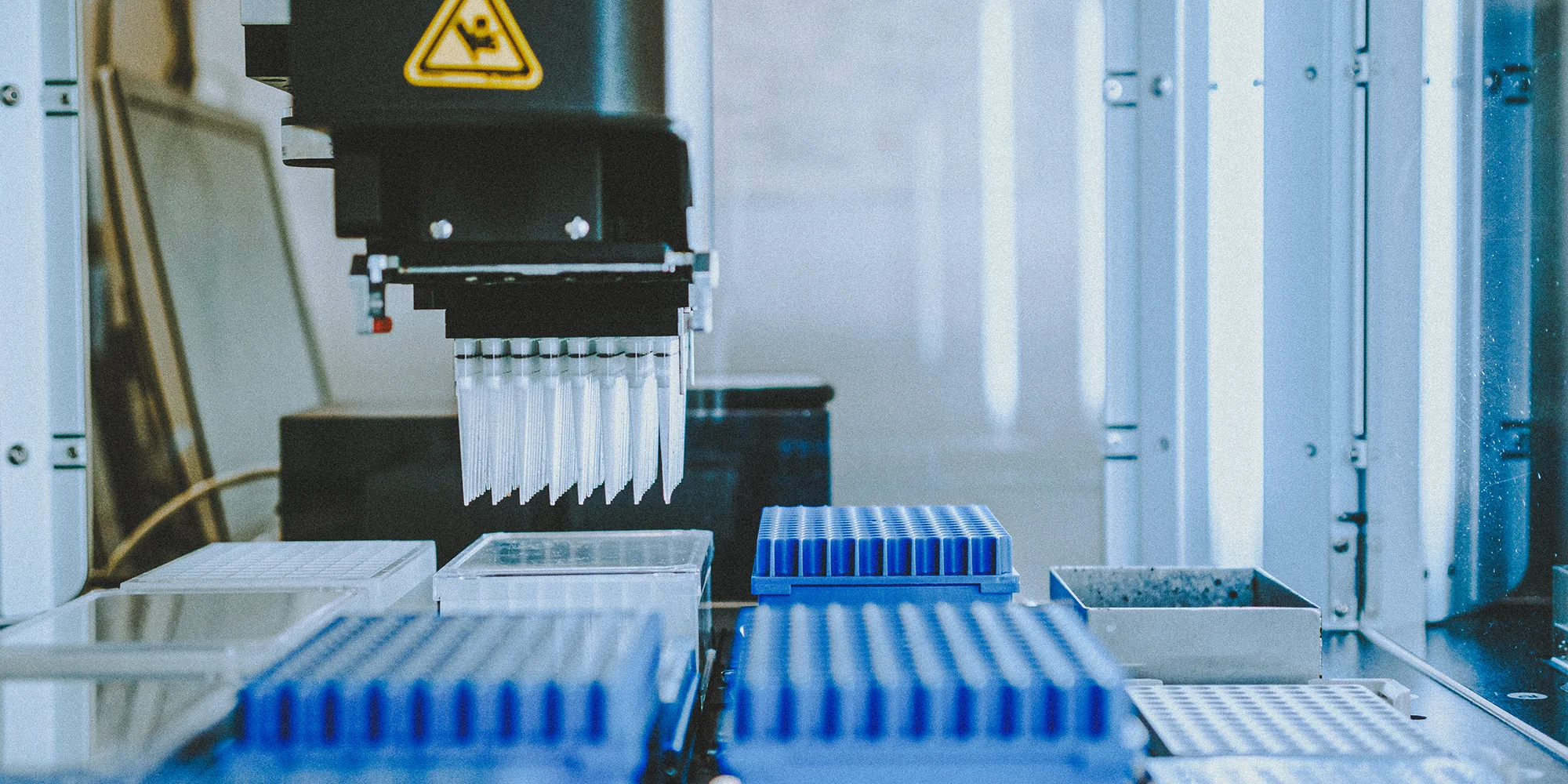
The client was developing a protein synthesis platform for drug discovery and wanted to automate a laboratory process that was being performed manually. The process involved accurate pipetting of very small volumes, thermal cycling and magnetic bead-based separation, with precise liquid-level control and aspiration being critical. The manual process limited how many samples could be handled in a day, constraining the throughput needed for the next stage of the programme.
The scientific team understood the process in detail but automating it introduced a new set of challenges. An experienced scientist could make small adjustments instinctively as they worked, judging liquid levels, positioning the pipette and responding to what they observed. A robotic system would need to reproduce those steps consistently while supporting much greater throughput.
The client knew automation was needed to support the next stage of the programme, but it was not yet clear what the system needed to do or which platform would be the right fit. With an investment of around $150,000, lead times of 10–12 weeks and a purchase decision needed within a few months, choosing the wrong system carried significant operational and financial risk.
42T’s solution
42T translated the scientists’ practical knowledge into clear engineering requirements. This included defining what would be needed to move from individually handled samples to automated 96-sample runs, creating a route to a step-change in sample-processing capacity. The work looked beyond the individual liquid-handling steps to how the system would perform in day-to-day operation, considering throughput across a 24-hour cycle, error detection and recovery, the technical support available to scientists and flexibility as the programme developed.
By considering the automation as part of the wider laboratory operation, 42T helped the client assess the true cost and value of each option. This included the potential to increase sample-processing capacity, reduce hands-on scientist time and operate larger runs unattended, alongside the level of supplier support available and how well each system could support the programme as it developed.
These requirements were brought together in a client-approved specification that suppliers could respond to directly, giving the client a clear, vendor-neutral basis for comparison. By focusing the selection on the requirements of the actual process, 42T helped the client cut through unsuitable options and narrow the market to two viable systems in weeks rather than months. This gave the client a clearer route towards the higher-throughput automation needed for the next stage of its programme, while reducing the risk around a $150,000 investment.
“We all really appreciate your contributions both to the specification per se and your process insights along the way. And it’s been great working with you! Looking forward to more in the future.”
Client feedback
Why 42T?
Accelerating a time-critical decision
Bringing engineering structure to complex investment decisions to help clients reach viable options faster.
Providing independent, vendor-neutral guidance
Assessing systems around the client’s process and operational needs.
Translating science into engineering requirements
Turning laboratory processes and scientist knowledge into clear requirements that automation suppliers could respond to.
Meet the team

Jon joined 42T as a graduate engineer and has since worked across mechanical engineering, project management, industrial sector leadership and business development before becoming CEO. With a PhD in Microengineering, he brings a strong technical and commercial perspective to product development.

David, AKA Griff, brings extensive experience in industrial automation, complex system design and engineering leadership. Educated at Cambridge University with a postgraduate specialism in Design, Manufacture and Management, he is known for making complex problems accessible and bridging technical depth with real-world application.
Let us help you