As healthcare increasingly moves beyond the clinic, pharmaceutical and device companies face a practical challenge: how can larger-volume therapies be delivered at home without making treatment disruptive or burdensome for patients?
Many advanced therapies still require lengthy clinical infusions, while existing home-based subcutaneous systems can involve smaller volumes, repeated preparation and multiple injection sites. 42T developed a wearable large-volume drug delivery demonstrator to explore how up to 600 mL of medication could instead be carried discreetly on the body, allowing treatment to fit more naturally around everyday life.
Key outcomes
Explored how very large drug volumes could be integrated into a wearable system for subcutaneous drug delivery on the go.
Identified a route for large-volume therapies to move beyond clinic-based infusion and into everyday care settings.
Prioritised mobility, comfort and discretion so patients can remain active while treatment continues.
Combined existing technologies with insight into drug delivery, market needs and patient usability to create a demonstrator that can be built upon.
The challenge
Patients receiving therapies such as immunoglobulins for immunodeficiency disorders, or biologic treatments for autoimmune disease and cancer, can require large volumes of medication delivered over extended periods. Traditionally, many of these treatments have relied on intravenous infusion in a hospital or clinic, requiring patients to travel for appointments and spend significant time receiving treatment.
Advances in drug formulation and delivery are changing what is possible. Increasingly, therapies that once depended on intravenous administration can be delivered subcutaneously, creating opportunities for treatment to move from the clinic into the home.
But existing home-based solutions do not always make large-volume treatment practical. Many ambulatory subcutaneous systems have limited capacity, while larger doses can require multiple syringes, injection sites or repeated infusions. Pumps may also need to be carried in bags with tubing and multiple needles attached to the body, restricting movement while treatment takes place.
Large-volume drug delivery at home is increasingly possible in principle, but existing approaches do not always make it practical for patients. So how can treatment be delivered in a way that gives patients greater freedom rather than simply replacing one form of restriction with another?
42T’s solution
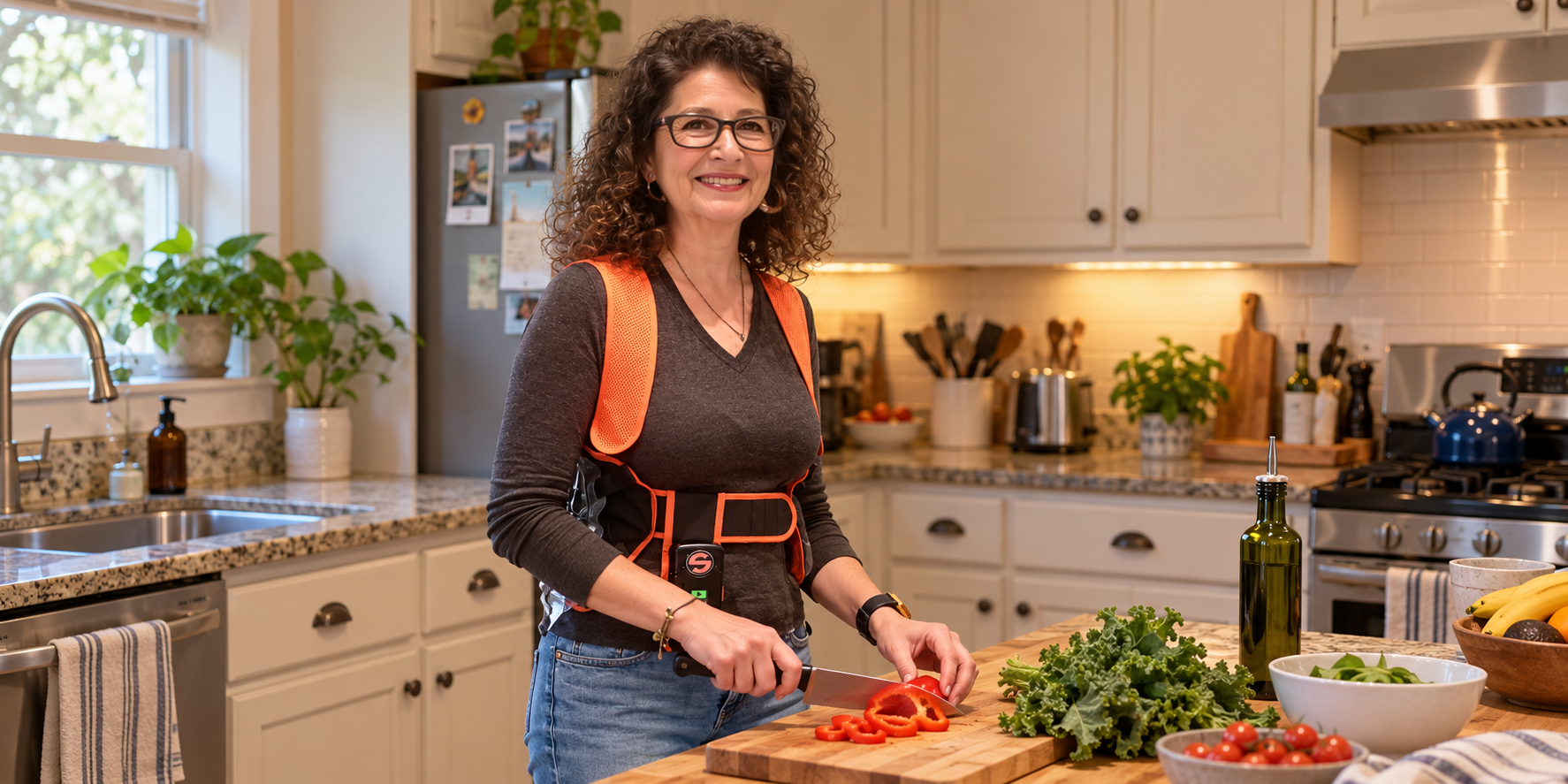
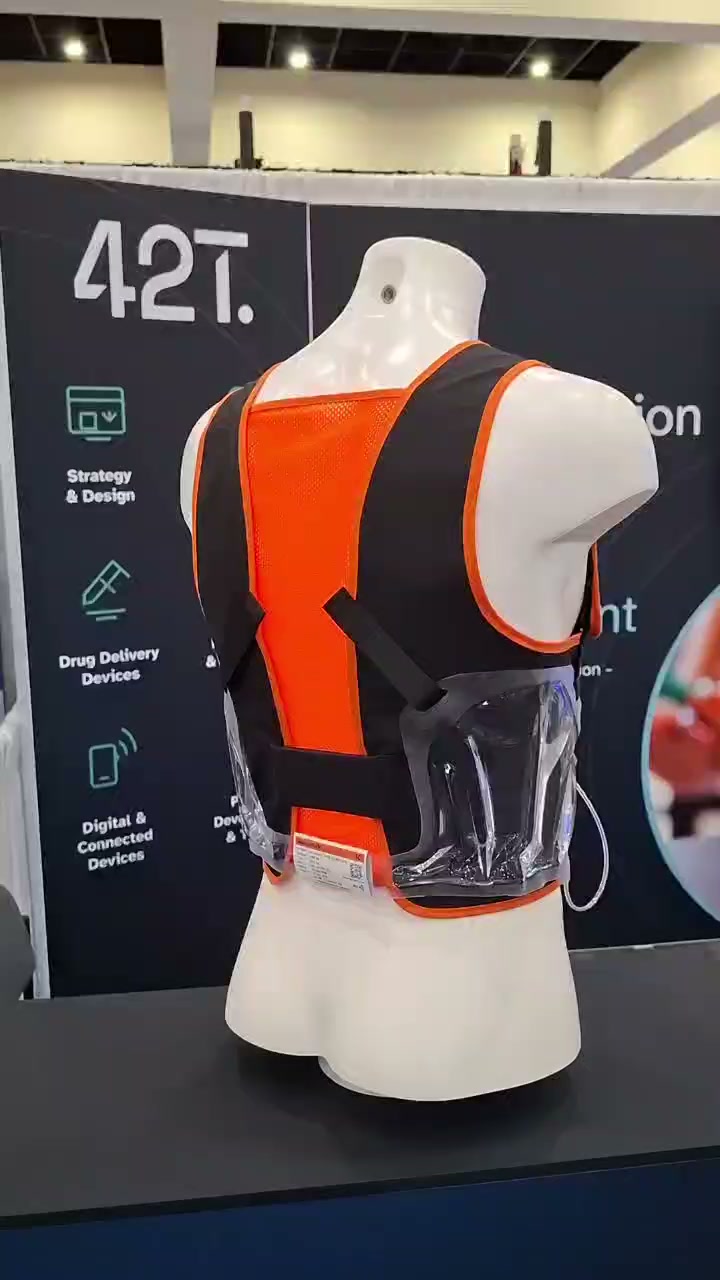
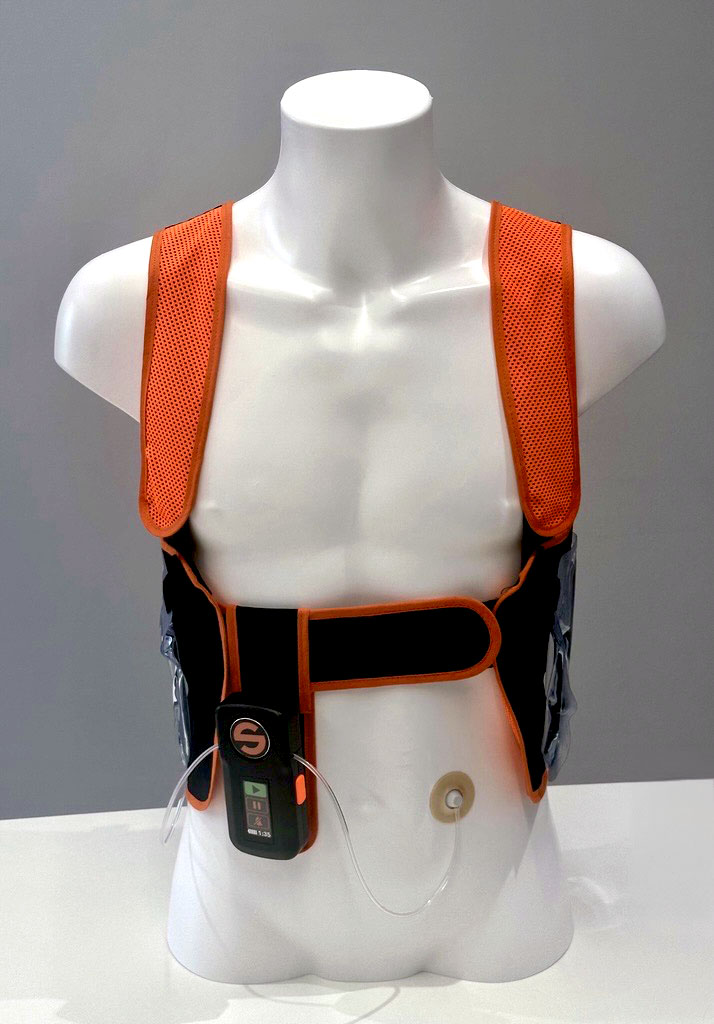
To explore this opportunity, 42T developed SQ-GO, a wearable concept for large-volume subcutaneous drug delivery designed to allow treatment to continue while patients go about everyday life. The concept combines a body-worn vest, a large drug reservoir and a delivery system in a format designed around volumes of up to approximately 600 mL, representing a step change in capacity compared with many existing ambulatory systems.
Patient experience sits at the heart of the concept. The vest is designed to be discreet, comfortable and easy to wear, allowing patients to remain mobile during treatment rather than being tied to a chair, pump or clinic environment. The vest is designed around practical factors such as reduced mobility or dexterity, ease of dressing, tubing management and how the device could sit beneath clothing to preserve privacy and dignity.
The concept also aims to make administration as frictionless as possible: medication would be prepared by the pharmacy and supplied ready for the patient to connect to the system, attach the delivery line to their subcutaneous port and begin treatment with minimal setup.
Making larger-volume therapies practical at home could have benefits well beyond the patient experience. It could expand the range of treatments suitable for home administration, give pharmaceutical and drug-delivery companies greater flexibility in how future therapies reach patients, and reduce reliance on hospital-based infusion. For healthcare providers, that could help relieve pressure on clinical capacity and reduce the need for suitable treatments to be delivered in hospital.
SQ-GO is being shown at the Parenteral Drug Association (PDA) event in Palm Springs on 6-7th October 2026, on stand 622, giving pharmaceutical and device teams something tangible to see and respond to. The demonstrator is intended to start conversations about what the next generation of large-volume home drug delivery could look like and what would be needed to make it practical.
The SQ-GO: A compact wearable device for large-volume subcutaneous drug delivery on the go.
“If we want more therapies to move into the home, we need to design around patients’ lives, not expect patients to design their lives around treatment.”
Why 42T?
Putting patients first
Designing around comfort, dignity and the practical realities of using treatment at home.
Designing for real-world use
Combining human factors and product design to make complex medical technologies easier to live with and use.
Shaping the future of drug delivery
Combining sector expertise, patient insight and engineering innovation to identify new opportunities in drug delivery.
Andy is a design and usability specialist with over 35 years of experience, including 20 years in medical devices. His expertise spans industrial design, human factors and design strategy, with extensive experience developing products for regulated healthcare environments.
Martin is a Principal Consultant at 42T with over 25 years of experience developing medical devices, particularly in pharmaceutical and drug-delivery applications. He has led multidisciplinary teams across the full product lifecycle, from early concept through to manufacture.
Let us help you
We excel in deep innovation and technical breakthroughs, from early-stage exploration to end-to-end development and manufacturing.